The Best Kept Secret in Calabasas Wellness: Why Somatic Bodywork Is Outperforming Physical Therapy, Chiropractic, and Conventional Massage for Chronic Pain

If you live in Calabasas, Malibu, Agoura Hills, Woodland Hills, or the surrounding communities of the Conejo Valley — and you have been managing chronic pain, persistent tension, or a body that simply will not cooperate — this article is for you.
You have probably tried the standard options. Physical therapy that gave you exercises but never got to the root of the pattern. Chiropractic that felt good for a day and then reset. Massage that relaxed you but didn't hold. Pain medication that managed the symptom while the cause continued to compound.

There is a reason none of those approaches fully worked. And there is a better way.
Somatic bodywork — specifically the fascia-based, nervous-system-informed approach I have developed over 30 years of practice — addresses the root architecture of chronic pain in a way that conventional treatments simply do not reach.
I am Ramsay Mead, and I work with private clients offering somatic bodywork Calabasas and throughout Los Angeles area from my practice in the Conejo Valley. What follows is an honest account of why chronic pain persists, what somatic bodywork actually does about it, and why it is producing results for my clients that nothing else has.
Why Chronic Pain Persists — The Real Reason
Chronic pain is one of the most misunderstood and undertreated conditions in modern medicine. The conventional model treats it as a structural problem: something is compressed, inflamed, misaligned, or damaged, and the goal of treatment is to fix that thing.
The problem is that for the majority of people living with chronic pain — especially pain that has persisted for more than three months — the structural explanation is incomplete at best and misleading at worst.
Here is what the research increasingly confirms:
Pain Is a Nervous System Event
Pain is not simply a signal from damaged tissue. It is an output of the nervous system — a protective response generated by the brain when it perceives threat to the body. In acute injury, that response is appropriate and time-limited. In chronic pain, the threat perception has become dysregulated — the alarm system is stuck in the on position long after the original trigger has resolved.
This is why you can have significant structural findings on an MRI — disc bulges, degeneration, tears — and feel no pain. And why someone else can have a completely clean MRI and be in agony. The scan shows the structure. It does not show the nervous system's relationship to that structure.
Fascia Holds the Pattern
The body's connective tissue — its fascia — is where chronic stress patterns are stored and perpetuated. Fascia that has been braced against pain, compressed by poor posture, or tightened by emotional stress develops restrictions that pull on the nervous system's sensory receptors constantly, maintaining a low-grade threat signal that keeps pain alive even after the original injury has healed.
Until those fascial patterns are addressed directly — with skilled, sustained, body-intelligent touch — the nervous system has no reason to downregulate its alarm. The pain continues. The tension continues. The body continues to age faster than it should.
The Missing Piece: Somatic Awareness
Somatic means of or relating to the body as experienced from within. Somatic bodywork does not just apply external force to tissue — it engages the client's own nervous system in the process of reorganization. This is the piece that most conventional treatments miss entirely.
When a client learns to bring conscious, non-reactive awareness to areas of tension and pain — when they learn to breathe into restriction rather than brace against it — the nervous system begins to update its threat map. The fascia releases more completely. The change holds longer. The client becomes an active participant in their own healing rather than a passive recipient of treatment.
What Somatic Bodywork Looks Like in Practice
New clients in Calabasas and the surrounding communities often come to me after years of conventional treatment. They are intelligent, often well-researched, and understandably skeptical. Here is what they typically experience:
The First Session
We begin with a conversation — not a medical intake form, but a genuine dialogue about what you are experiencing, how long you have been experiencing it, what makes it better or worse, and what you have already tried. I am listening not just to your words but to how you hold your body as you speak. Where the breath goes. What braces when you describe certain experiences.
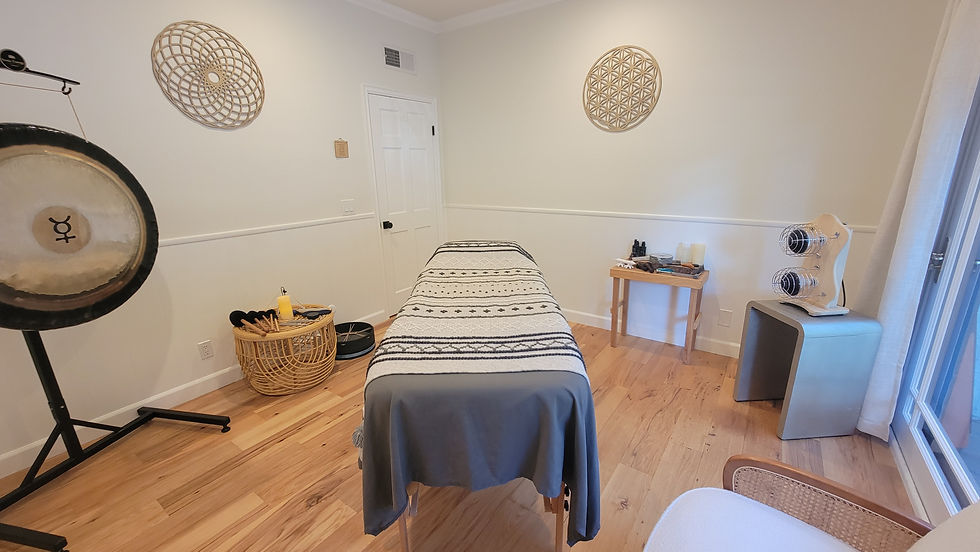
The session itself takes place on a treatment table. You remain fully clothed. I work with sustained manual contact — slow, directional, attentive — applied to the fascial and connective tissue that is maintaining the pattern. I do not force. I do not rush. I follow what the tissue offers.
Throughout the session I offer somatic cues — gentle invitations to bring awareness to specific sensations, to breathe into areas of holding, to notice without reacting. These cues are not incidental. They are central to the effectiveness of the work.
Most clients notice significant shifts within a single session — reduced pain, greater range of motion, and a quality of ease that they describe as unfamiliar and deeply welcome.
A Course of Treatment
Most chronic patterns require a series of sessions to fully address — typically 4 to 6, spaced one to two weeks apart. The work is cumulative: each session builds on the last, progressively releasing deeper layers of restriction and giving the nervous system time to integrate the change.
Between sessions I provide specific movement practices, breathwork tools, and self-care protocols tailored to each client. These are not generic exercises — they are precise somatic practices designed to continue the work between our sessions and accelerate the pace of change.
By the end of a course of treatment, most clients are not just in less pain. They are in a fundamentally different relationship with their body — more aware, more capable, more resilient.
Conditions I Commonly Address in the Calabasas and LA Area
Over 30 years of practice, these are the patterns I see most frequently — and address most effectively:
Chronic Low Back and Hip Pain
The most common presentation in my practice. Usually involving a complex of fascial restriction in the thoracolumbar region, psoas and iliacus tightening, sacroiliac dysfunction, and compensatory patterns throughout the lower extremity. Conventional treatment often addresses one component while missing the others. Somatic bodywork addresses the pattern as a whole.
Neck, Shoulder, and Upper Back Tension
Epidemic in the Conejo Valley and West LA professional population. Driven by screen time, stress, and the chronic forward head posture that our digital lives produce. The fascial component — specifically the restrictions in the scalenes, suboccipitals, thoracic inlet, and anterior chest — is almost never addressed by standard treatment approaches.
Post-Surgical Recovery and Scar Tissue
Surgery saves lives. It also creates scar tissue — fascial adhesions that form around the surgical site and can cause pain, restriction, and dysfunction years after the operation. Skilled fascial work can significantly reduce the impact of surgical scarring, restoring mobility and reducing pain in ways that post-surgical rehabilitation programs typically do not include.
Stress-Related Somatic Patterns
The body keeps the score — as the research confirms and as any skilled somatic practitioner knows from clinical observation. Chronic stress, anxiety, and unprocessed emotional experience live in the body as fascial tension patterns. Jaw clenching. Chest tightening. Shoulder bracing. Belly holding. These patterns are real, measurable, and directly addressable through somatic bodywork.
Fatigue, Inflammation, and Systemic Dysregulation
When the fascial and lymphatic systems are compromised, the downstream effects are systemic: fatigue that sleep does not resolve, diffuse inflammation, immune dysfunction, and a general sense that the body is not running efficiently. Addressing the structural foundations of these patterns — through fascia work, lymphatic activation, and nervous system regulation — produces improvements that are often faster and more comprehensive than supplement or dietary approaches alone.
Why Location Matters — Serving Calabasas, Malibu, and the Conejo Valley
I chose to base my private practice in the Calabasas and Conejo Valley area for specific reasons. This community — spanning Calabasas, Hidden Hills, Malibu, Westlake Village, Agoura Hills, Thousand Oaks, and Woodland Hills — has a high concentration of exactly the kind of clients I work best with: intelligent, health-conscious, results-oriented adults who take their wellbeing seriously and are ready to invest appropriately in genuine care.
The demand for sophisticated, results-producing bodywork in this area is real and largely unmet. Most of what is available — even at premium price points — is conventional massage with a wellness veneer. Deep, skillful, clinically-informed somatic bodywork of the kind I provide is genuinely rare here.
I also serve clients in West Los Angeles — Brentwood, Santa Monica, Pacific Palisades — and offer mobile sessions for clients who prefer to receive care in their home environment.
How to Get Started
If what I have described resonates — if you have been living with pain or restriction that nothing has fully resolved — I invite you to reach out for a consultation.
We will talk about what you are experiencing, whether my approach is the right fit for you, and what a course of treatment might look like. There is no pressure and no obligation. I work with a small number of private clients and I am selective about fit — I want to work with people I can genuinely help.
To book a consultation or learn more about my work, visit embodiedlongevitymethod.net or text BOOK to 310-513-3290.
Serving Calabasas, Hidden Hills, Malibu, Westlake Village, Agoura Hills, Thousand Oaks, Woodland Hills, Brentwood, Santa Monica, and surrounding Los Angeles communities.
— Ramsay Mead | Embodied Longevity Method™ | Calabasas, CA | embodiedlongevitymethod.net | 310-513-3290


Comments